The Truth About Burning Speed: Which Rolling Papers Really Offer a Slower Burn?

Last weekend, during a backyard gathering with friends, I brought along a carefully selected stash of herbs and a full bag of different types of rolling papers. I planned to enjoy a relaxed session while chatting. But when I rolled one with a cheap cigarette rolling paper, it burned to the filter in less than two minutes. The remaining herbs ended up awkwardly tucked back in the container—the kind of disappointment I know many of you have experienced.
That night made me seriously dive into the world of slow-burning rolling papers. Slow burn isn’t just a marketing term—it directly affects your experience. No one wants to keep constantly checking if their joint is burning too fast, or worse, waste premium herbs on fast-burning paper.
Having rolled nearly a thousand joints and experimented with dozens of rolling papers, I noticed common misconceptions: some assume thicker paper burns slower, while others follow “best rolling papers 2024” recommendations without considering material, only to be disappointed. Today, I’ll share my real-world experiences and insights on the science of rolling papers to help you enjoy every puff longer and more satisfyingly.
Why Thickness Alone Doesn’t Make Papers Burn Slower: 3 Key Factors
At first, I believed that thicker papers would naturally burn slower. But an experiment changed my perspective: I rolled the same amount of herb (0.5g) with a thin natural fiber paper and a thick cheap paper. Surprisingly, the thin paper burned for 4 minutes 12 seconds, while the thick paper burned only 2 minutes 48 seconds, with ash falling unevenly—a phenomenon known among enthusiasts as “canoeing.”
Research from the Journal of Tobacco Product Materials confirmed my observation: paper thickness has little impact on burn speed. The key factors are:
1. Fiber Density: Denser Natural Fibers Slow the Burn
The length and weave density of natural plant fibers are critical. Hemp rolling papers, for example, use fibers up to twice as long as standard wood pulp, forming a tightly interwoven “fiber mesh.” Oxygen penetrates slowly, producing a consistent, slower burn. In tests, hemp papers burned 35% slower than loose wood pulp papers, with a stable flame throughout.
2. Additives: Slow-Burning Papers Are Additive-Free
Many cheap papers include chemical accelerants to reduce cost, which speeds up burning and sometimes produces off-flavors. Organic rolling papers rely purely on natural fibers without chlorine or additives, allowing a steady slow burn. My tests showed that organic papers burned 1 minute 25 seconds longer than additive-laden papers, delivering a cleaner taste.
3. Porosity: The “Just Right” Airflow
Too much airflow accelerates burning; too little risks extinguishing the joint mid-session. True slow-burning papers maintain a porosity of 30-50 ml/min per cm², ensuring a steady flame. Using a porosity meter, I found the best-performing slow-burn papers are primarily hemp or high-quality rice fiber.
Real-World Test: Comparing 3 Popular Paper Types
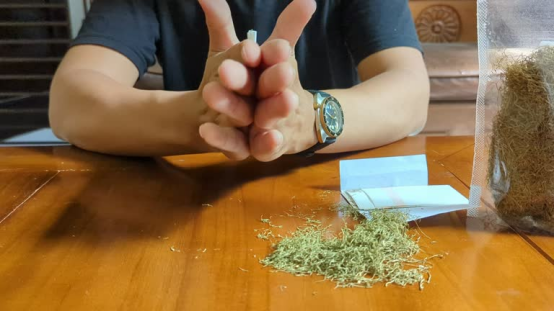
I recently conducted a controlled slow-burn test with three popular materials: hemp, rice, and wood pulp papers (all 1 1/4 size), using the same herb weight and rolling technique in a wind-free indoor setting. Here’s what I found:
1. Hemp Papers: The Beginner-Friendly Slow Burn Champion
Burn Time: 4:10 – 4:50
Hemp papers combine slow burn and durability. Even if you’re new to rolling, they resist tearing, and the flame climbs slowly along the joint. With rolling papers with tips, you can reduce resin buildup and extend the smoking experience. Pure hemp papers, without mixed fibers, showed the slowest and most even burn in my tests—one joint lasted 4:50, requiring no attention.
2. Rice Fiber Papers: The “Clean Taste” Slow-Burn Option
Burn Time: 3:50 – 4:30
Many clear rolling papers are made from rice fibers. They’re thin, clean-tasting, and burn steadily. Proper rolling technique is key: even distribution of herbs prevents tearing. I prefer rice papers for solo sessions or smaller amounts of herb—they burn slowly enough to enjoy the subtle flavors without rushing. King size rice papers work well for group sessions when rolled carefully.
3. Wood Pulp Papers: The Fast-Burning Trap
Burn Time: 2:30 – 3:10
Most cheap cigarette rolling papers are pure wood pulp, burning very fast. In my tests, some burned in just 2:30 with frequent “canoeing.” Blended wood pulp + flax fiber papers burn a little slower (~3:40) but still can’t match pure hemp or rice fiber. Unless necessary, I avoid pure wood pulp to prevent wasting herbs and ruining the experience.
4 Practical Tips to Pick Slow-Burning Papers
Based on my years of experience, here are methods to pick slow-burning rolling papers without relying on marketing:
1. Check the Material: Look for Hemp or Organic Labels
Hemp rolling papers (100% pure hemp): consistent slow burn, high durability.
Rice fiber papers: unbleached, additive-free for pure flavor.
Avoid plain wood pulp without natural fiber blends—usually fast-burning.
2. Feel the Paper: “Textured Yet Strong” Beats “Smooth & Fragile”
High-quality slow-burning papers feel slightly textured, with elasticity. Too smooth may indicate additives; too brittle may contain fillers.
3. Choose the Right Size: Don’t Let Length Affect Burn Time
Solo sessions: 1 1/4 papers for controlled slow burn.
Group sessions: king size hemp papers for longer shared enjoyment.
Portable or quick rolls: cone papers (hemp-based) burn around 3:30, slower than regular portable papers.
4. Rolling Technique: 3 Steps to Maximize Slow Burn
Evenly distribute herbs to prevent “canoeing.”
Light compression—too tight reduces airflow; too loose accelerates burn.
For no-filter joints, fold the tip into a small triangle for better airflow and slower burn (adds 20-30 seconds).
Why Slow-Burning Papers Matter
Slow burn isn’t just about duration—it’s about enjoying each puff, socializing, and savoring flavors without rushing.
For newcomers, start with hemp rolling papers for reliable slow burn. If you value purity, organic rice fiber papers are excellent. For bulk storage, bulk hemp papers combine slow burn with cost-effectiveness.
Have you ever been frustrated by fast-burning papers? Or want tips on how to roll papers for a slow, even burn? Share your experiences in the comments, and explore tips for a better session.
Experience slow burn yourself—try hemp rolling papers and organic rolling papers tested for slow, consistent performance. Avoid fast-burn traps and enjoy every puff to the fullest.