The Truth in the Ash How to Judge Rolling Paper Processing Quality

The ash left by a burning wood pulp rolling paper is its “hidden ingredient list”—a direct visual report on its processing. From pulp purity and bleaching to chemical additives, the ash’s color, texture, and consistency reveal key manufacturing details. By analyzing the burn of high-quality papers like these wood pulp pre-rolled cones, you can learn to unlock these clues and make smarter choices.
Table of Contents
The Science Behind the Ash Why It Tells the Story
The combustion of paper is the oxidation of its fibers and any processing residues.
- Pure wood pulp cellulose burns primarily to carbon dioxide and water vapor, leaving behind a minimal, stable mineral ash.
- Chemical additives like bleaches, dyes, or binding agents leave distinct residues that alter the ash’s appearance.
- Fiber refinement (e.g., beating consistency, screening purity) affects burn uniformity, reflected in the ash’s structure.
The 3 Visual Clues to Analyze Rolling Paper Processing
Clue 1: Ash Color (Indicates Pulp Purity & Bleaching)
- High-Quality Process (Pure Pulp, Chlorine-Free Bleach): Ash is a uniform, light gray or off-white with no dark specks. This indicates clean pulp and gentle, non-chlorine bleaching, as seen in products marked as natural or unbleached.
- Average Process (Mixed Pulp, Chemical Bleach): Ash appears dark gray, yellowish, or has embedded dark particles. This suggests recycled content, chemical bleach residues, or lower-grade pulp.
- Low-Quality Process (Heavy Additives): Ash is black, clumpy, or has unnatural colored residues. This signals incomplete combustion of dyes, adhesives, or other non-fibrous additives.
Clue 2: Ash Texture (Indicates Fiber Refinement & Formation)
- Fine Processing (High Refinement): Ash is a light, fluffy powder that dissipates easily. This shows fibers were finely beaten and evenly formed, allowing complete combustion.
- Coarse Processing (Low Refinement): Ash forms chunky flakes or solid pieces that don’t crumble. This indicates poorly processed fibers or impurities, leading to incomplete burning and a harsher smoke.
- Added Binders: Ash may leave a hard, brittle shell or slightly sticky residue, revealing agents used to stiffen the paper, which can affect burn quality.
Clue 3: Burn Behavior & Residue (Indicates Additive Content)
- Minimal Additives: The paper burns slowly and evenly with a consistent ember. Ash residue is minimal and clean, characteristic of a pure, natural slow-burning rolling paper.
- High Additives: Burn is erratic, with popping, sparks, or chemical odors. Ash residue is excessive. This points to dyes, flavorings, or burn-rate modifiers.
- Mixed Fibers: Burn is inconsistent, and ash contains stringy, unburned filaments. This can happen with non-wood fibers that have different combustion points.
The 3-Step Test to Judge Any Paper
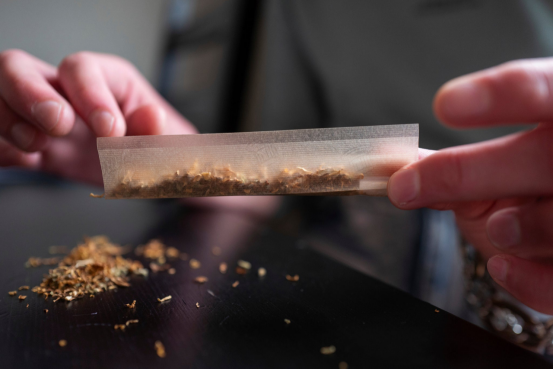
- Prepare: In a safe, ventilated area, light a small piece of paper (approx. 1″ square). Let it burn fully on a non-flammable surface.
- Observe: Note the ash color, its texture (powdery vs. chunky), the burn speed and consistency, and any odors.
- Analyze: Cross-reference your observations with the clues above. Light gray powder + even burn = high-quality processing. Dark, chunky ash + erratic burn = lower-quality processing.
A Case Study in Quality Ash from Premium Wood Pulp Papers
Examining the ash from the linked wood pulp pre-rolled cones reveals quality markers:
- Color: Uniform light gray/white ash indicates pure pulp and clean bleaching.
- Texture: A fine, powdery consistency confirms highly refined, evenly formed fibers.
- Burn: A slow, steady burn with no off-putting smell validates “no harsh chemicals” claims.
Common Mistakes to Avoid When Reading Ash
- Mistake 1: Assuming colored papers must leave colored ash. High-quality, eco-friendly dyes combust fully, leaving neutral ash. Colored residue indicates inferior dyes.
- Mistake 2: Thinking more ash means worse quality. Pure, dense fibers can leave a fine, light ash. The key metric is purity and texture, not sheer volume.
- Mistake 3: Believing a faster burn is better. A controlled, slow burn is the hallmark of a well-made paper. Fast, jumpy burns often indicate poor fiber structure or additives.
FAQ: Reading Rolling Paper Ash
Q1: Is it safe to burn paper to test it like this?
A: Yes, in a well-ventilated area, away from flammables, and on a safe surface like ceramic or metal. Use a small piece (1″ square) and extinguish it fully after observation. Never leave a test burn unattended.
Q2: What does white ash vs. black ash mean?
A: White or light gray ash typically indicates pure cellulose fibers with minimal mineral content or additives. Black or dark gray ash suggests the presence of unburned carbon, often from chemical additives, dyes, or lower-quality, impure pulp.
Q3: Can the burn test tell me if a paper is “organic” or “unbleached”?
A: Indirectly. Papers labeled unbleached often produce a slightly darker, natural beige-gray ash. Truly organic papers processed without chemicals will burn cleanly with a neutral-colored, fine ash and no chemical odor. The test supports the claim but should be combined with reputable certifications.
Q4: Why does some ash clump together?
A: Clumping ash usually signals incomplete combustion. This can be caused by:
- High levels of non-fibrous additives (e.g., gums, binders).
- Poorly refined, coarse fibers that don’t burn evenly.
- Moisture in the paper or the testing environment.
Q5: Does a slow burn always mean a better paper?
A: Generally, yes. A slow, even burn suggests a uniform paper density and a lack of accelerants. It allows for a smoother, cooler smoking experience. However, the burn should be consistent—not so slow that it constantly goes out.
Your Simple Guide to Purity and Quality
Learning to read rolling paper ash gives you a practical tool for assessing quality. Premium processing consistently results in light, fluffy ash and a clean, even burn. This simple test bypasses marketing and reveals the true nature of the paper in your hands.
Ready to put a paper to the test? Explore these wood pulp pre-rolled cones, a benchmark for clean-burning, high-quality processing.